Brothers at the Front
The Civil War Letters of James D. and William H. Wade (1862–1864)
33 letters and documents from the war years, each transcribed in full beside scans of the original pages.
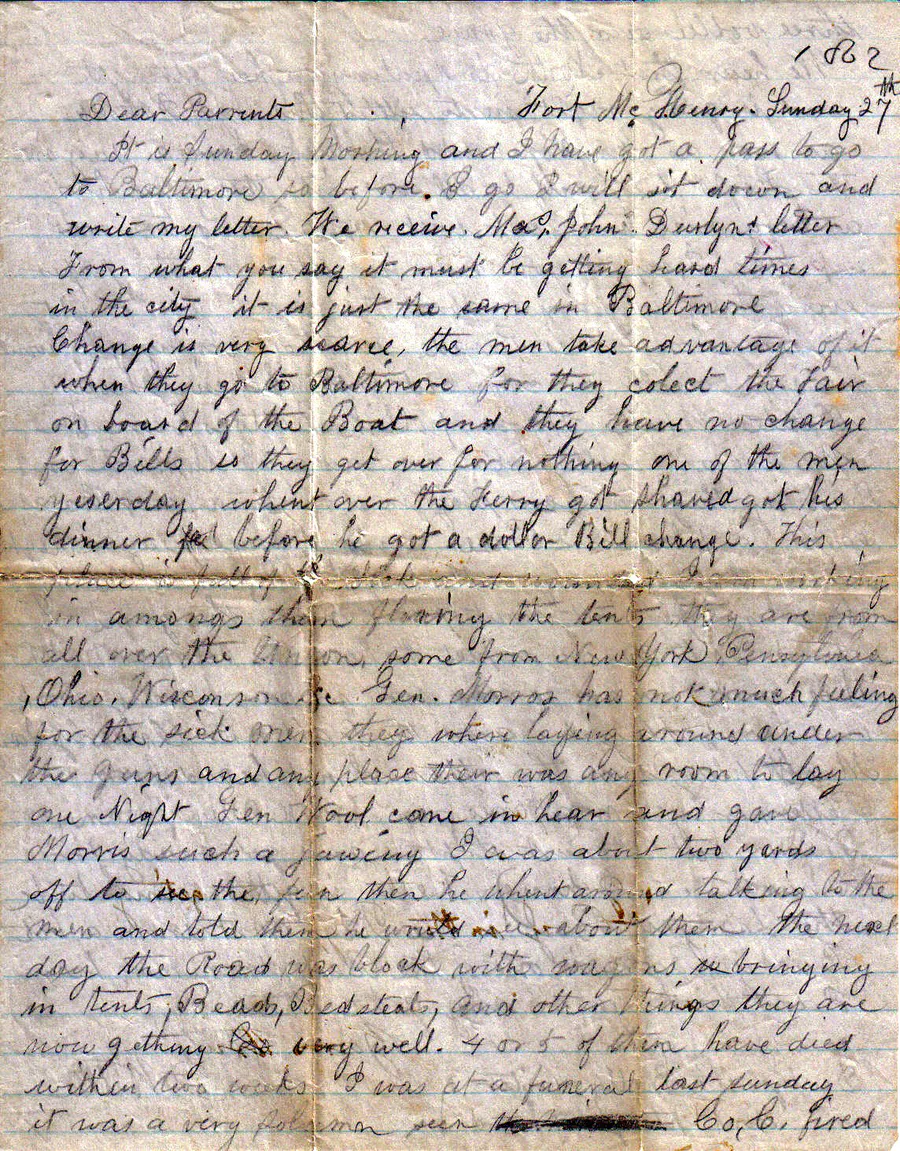
Begin with the first letter Willie to his parents, Fort McHenry, July 27, 1862Or follow the chronology of all 33, with the war’s events alongside.
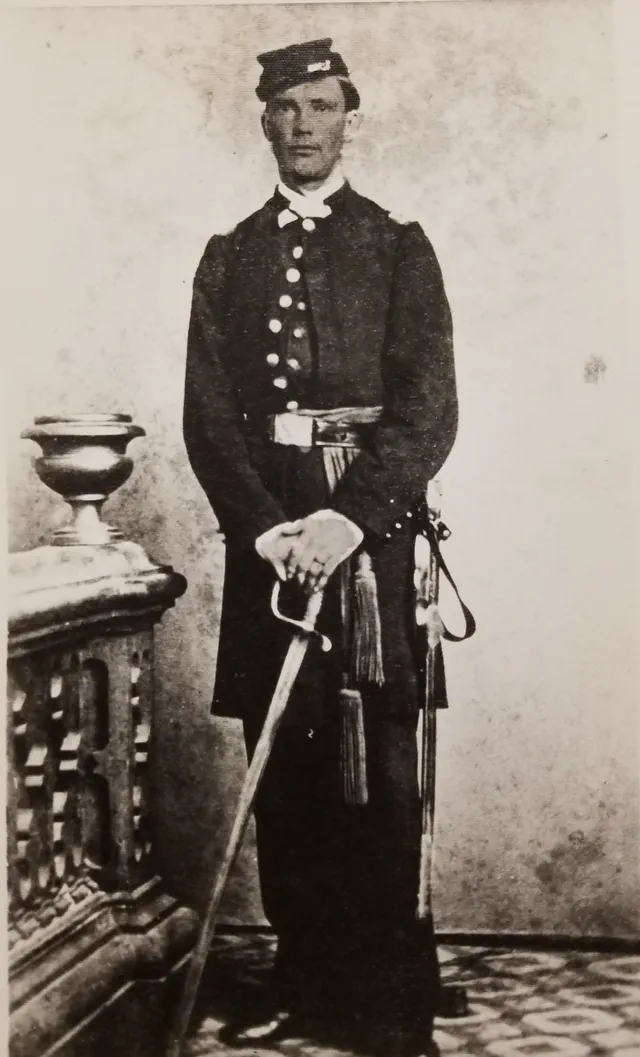
The brothers and their regiments
This site presents the preserved letters of James Duncan Wade and William Henry Wade, brothers from Williamsburgh, Long Island, New York, who served in the Union Army during the American Civil War. Between 1862 and 1864 they wrote home to their parents, and the family wrote back.
In the summer of 1862 the brothers served together at Fort McHenry, in Baltimore, in one of the “3 months regiments” (James, August 10, 1862). Lives Behind the Letters names the regiment. Both then enlisted as “three year men” (James, September 1, 1863) in the 176th New York Volunteers (Special Orders No. 273) and served with it in Louisiana, in the Department of the Gulf. Willie was home in Williamsburgh by the end of 1863 (Willie to James, December 27, 1863).
James stayed. In the fall of 1863, after recruiting and drilling a company of Black soldiers, he became a lieutenant in the 16th Regiment Corps d’Afrique (September 1 and October 19, 1863). He served with it on the Texas coast near the mouth of the Rio Grande (November 20, 1863), and by May 1864 it was the 87th U.S. Infantry (colored) (James to General Banks, May 24 and June 26, 1864).
Along the way the letters tell of a ball game between companies at Fort McHenry, with Willie on second base and James in right field (July 27, 1862); of the regiment in action near Brashear City, Louisiana (Willie, June 4, 1863), and of the surprise attack there on June 23, 1863, when “in half an hour we were all prisoners” (James, July 6, 1863); and of cotton run across the Rio Grande, and $4,000 offered to James and two other officers to let it go (April 13, 1864).
The collection was transcribed and edited by Melissa K. Dewey and David M. Jones in 2007, from fragile original documents entrusted to them by William Webb Wade, a descendant of the brothers. At Mr. Wade’s request they corrected the writers’ spelling, punctuation and grammar so the letters read easily, and they kept each writer’s voice. Where a word could not be made out, they substituted one that makes sense in its sentence but may not resemble the original. The Editors’ Note describes their method, and every letter page shows the transcription beside scans of the original pages, so a reader can check any passage.
“These documents are rich in history… Above all, these letters are first-hand looks at the lives of Union soldiers in the field.” — Melissa Dewey & David Jones, Editors’ Note, 2007